Case Report | | Peer-Reviewed

Challenges in the Management of Cystic Fibrosis in Morocco: A Case Report

Received: 3 January 2026     Accepted: 24 February 2026     Published: 17 March 2026
Views:       Downloads:
Abstract

Recurrent wheezing is common in infants, most often triggered by respiratory viral infections. When wheezing begins early and persists without symptom-free intervals, it is crucial to first exclude common underlying conditions such as gastroesophageal reflux disease, bronchopulmonary or vascular malformations, and decompensated cardiac disease. Once these etiologies have been ruled out, less frequent disorders—most notably cystic fibrosis—should be considered. Through this case report, we aim to highlight the diagnostic and management challenges of cystic fibrosis in our setting. A 4-month-old infant was hospitalized for recurrent wheezing and dyspnea without symptom-free intervals. Clinical examination revealed severe respiratory distress with diffuse wheezing, along with growth faltering (–3 SD). Chest X-ray demonstrated perihilar atelectasis, bronchial wall thickening in the left lower lobe and the right apical basal segment, and left-sided thoracic hyperinflation and chest CT angiography showed bilateral pneumonia. Immunological investigations were unremarkable. A sweat chloride test, performed twice, confirmed markedly elevated chloride concentrations. The patient showed a favorable clinical evolution following treatment with antibiotic therapy, pancreatic enzyme replacement, vitamin supplementation, and respiratory physiotherapy. In the absence of systematic neonatal screening in our context and to prevent severe and fatal complications, cystic fibrosis should be considered in any case of persistent wheezing in an infant.

Published in American Journal of Pediatrics (Volume 12, Issue 1)
DOI 10.11648/j.ajp.20261201.15
Page(s) 34-38
Creative Commons

This is an Open Access article, distributed under the terms of the Creative Commons Attribution 4.0 International License (http://creativecommons.org/licenses/by/4.0/), which permits unrestricted use, distribution and reproduction in any medium or format, provided the original work is properly cited.

Copyright

Copyright © The Author(s), 2026. Published by Science Publishing Group

Keywords

Cystic Fibrosis, Challenge in the Management, Morocco, Children

1. Introduction
Cystic fibrosis is an autosomal recessive genetic disorder affecting multiple organ systems. It results from mutations in the CFTR gene (Cystic Fibrosis Transmembrane Conductance Regulator), which encodes a transmembrane channel essential for chloride and bicarbonate transport across epithelial cells of serous and seromucous glands. Dysfunction of this protein leads to dehydration of mucous secretions, particularly within the respiratory and gastrointestinal tracts. Cystic fibrosis is the most common fatal genetic disease in Caucasian populations, with more than 7,500 patients reported in France in 2021 and an estimated 30,000 in Europe and 90,000 worldwide . Clinical manifestations typically appear early in childhood, with respiratory involvement—characterized by recurrent bacterial superinfections—being the major determinant of morbidity and mortality. Advances in neonatal screening and early diagnosis have substantially improved prognosis. We report the case of a young infant hospitalized for persistent wheezing, which ultimately led to the diagnosis of cystic fibrosis.
2. Clinical Case
We report the case of a 4-month-old female infant, adopted and living with illiterate parents in a rural area, who was hospitalized for wheezing and dyspnea. One month earlier, she had been admitted to the pediatric emergency department for acute dehydration secondary to diarrhea. She was born at term with a birth weight of 3500 g. Her vaccination schedule was up to date according to the Moroccan national immunization program, and her psychomotor development was appropriate for age.
The medical history revealed no chronic vomiting and no recent contact with tuberculosis.
Since birth, the infant had persistent wheezing associated with bronchial congestion. Twenty days prior to admission, she developed episodes of watery diarrhea—up to eight stools per day—accompanied by wheezing and dyspnea, resulting in a weight loss of 700 g over the same period.
On clinical examination, she was tachypneic at 54 breaths per minute, tachycardic at 180 beats per minute, and exhibited signs of respiratory distress, including moderate intercostal retractions. She also presented with signs of severe dehydration, notably persistent skin tenting and sunken eyes. The infant was afebrile and weighed 3000 g (< –3 SD). Pulmonary auscultation revealed bilateral wheezing, while cardiovascular examination was unremarkable.
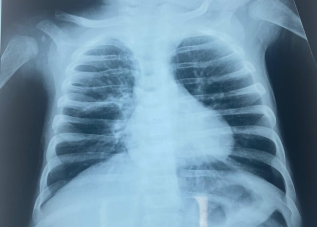
The initial chest radiograph demonstrated perihilar atelectasis, bronchial wall thickening in the left lower lobe and the right apical basal segment, and left-sided thoracic hyperinflation.(Figure 1). Complete blood count showed leukocytosis of 11,230/mm3 with neutrophil predominance, as well as thrombocytosis (650,000/mm3). Serum electrolytes revealed hyponatremia at 132 mEq/L. Liver and renal function tests were within normal limits (urea 0.29 g/L, creatinine 4.9 mg/L, aspartate aminotransferase 44 U/L, alanine aminotransferase 21 U/L). C-reactive protein was negative at 1.6 mg/L.
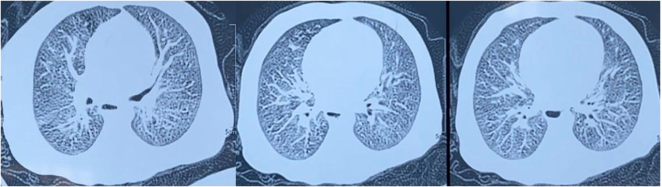
The infant initially received appropriate intravenous rehydration, low-flow oxygen therapy, and empirical antibiotic treatment. An etiological workup was conducted to investigate the cause of the persistent dyspnea associated with growth failure. Echocardiography was unremarkable. Chest CT angiography revealed micronodular infiltrates and bilateral pneumonia, with no evidence of bronchial or vascular malformations (Figure 2).
Figure 1. Perihilar atelectasis, bronchial wall thickening in the left lower lobe and the right apical basal segment, and left-sided thoracic hyperinflation.
Figure 2. Micronodular infiltrates and bilateral pneumonia, with no evidence of bronchial or vascular malformations.
Given the clinical presentation, the diagnosis of cystic fibrosis was established. The patient was initiated on amoxicillin–clavulanic acid (150 mg/kg/day for 15 days) for bilateral pneumonia. Pancreatic enzyme replacement therapy was started at 8,000 IU/kg/day to manage exocrine pancreatic insufficiency. Supplementation with fat-soluble vitamins (A, D, E, and K) was provided, together with a high-calorie diet enriched in salt and unsaturated fatty acids. Daily respiratory physiotherapy was initiated, and the mother was instructed on home-based techniques. Under this comprehensive management, the infant showed progressive resolution of dyspnea and wheezing, with satisfactory weight gain of 1 kg over one month.
3. Discussion
Cystic fibrosis is an autosomal recessive genetic disorder caused by mutations in the CFTR (Cystic Fibrosis Transmembrane Conductance Regulator) gene, located on the long arm of chromosome 7 (7q31). This gene encodes a transmembrane protein responsible for regulating chloride and bicarbonate transport across epithelial cell membranes. Dysfunction of the CFTR protein leads to dehydration of mucous secretions, resulting in multisystemic involvement predominantly affecting the respiratory and gastrointestinal tracts .
It is the most frequent genetic disease in the Caucasian population. In Europe and North America, the prevalence is approximately 1 in 2,500 live births . In France, more than 6,000 individuals are living with cystic fibrosis, and nearly 200 affected infants are born each year . At the national level, however, the disease remains underdiagnosed. The absence of a dedicated registry, the lack of a neonatal screening program, and the limited number of available genetic studies preclude accurate estimates of its true prevalence.
The clinical expression of cystic fibrosis is highly heterogeneous and varies significantly among patients . In Morocco, available data regarding the clinical presentation of the disease and the spectrum of CFTR gene mutations remain limited. Based on molecular epidemiology considerations and the high prevalence of consanguinity in the Moroccan population (approximately 15% of marriages in 2009) , it has been suggested that the prevalence of cystic fibrosis could be comparable to that observed in European populations . In 2008, Rabti et al. estimated the potential national prevalence by screening for heterozygous carriers in a DNA sample of 150 healthy individuals and reported an expected disease frequency ranging from 1/1,680 to 1/4,150 . Nonetheless, larger, population-based studies are required to accurately determine both the prevalence and the molecular landscape of cystic fibrosis in Morocco.
Diagnosis often remains unrecognized or is established late due to the broad variability of clinical manifestations. Respiratory involvement typically represents the most common initial presentation.
Approximately 75% of infants develop symptoms within the first year of life. These manifestations most commonly include recurrent bronchiolitis, persistent bronchial congestion, chronic cough, and bronchorrhea, often associated with repeated episodes of pneumonia, typically caused by Staphylococcus aureus and Haemophilus influenzae . Infection with Pseudomonas aeruginosa, detected in nearly 18.7% of children under four years of age, represents a major turning point in the disease trajectory. Its acquisition is strongly associated with the gradual development of chronic obstructive airway disease, the onset of bronchiectasis, and, over time, the progression to chronic respiratory failure .
Radiological findings are non-specific. Common abnormalities include pulmonary hyperinflation and bronchial wall thickening, which progressively extend and may evolve into diffuse bronchiectasis .
Digestive involvement in cystic fibrosis may appear during the neonatal period, most commonly as meconium ileus, but also as delayed meconium passage or, more rarely, as cholestatic jaundice.
In infants and children, the clinical picture is dominated by chronic diarrhea with fatty, foul-smelling stools, reflecting maldigestion and malabsorption secondary to exocrine pancreatic insufficiency (present in 70 to 80% of patients) . This pancreatic dysfunction leads to failure to thrive and deficiencies in fat-soluble vitamins (A, D, E, and K) as well as trace elements .
The management of cystic fibrosis in Morocco remains particularly challenging due to multiple diagnostic, therapeutic, and organizational limitations. Neonatal screening—an essential step for early diagnosis and timely intervention—is not performed systematically and is largely restricted to the private sector. This contributes to delayed diagnosis and a persistently high rate of morbidity and mortality among affected children. In contrast, many countries, including those in Europe, North America, and Australia, and France since 2002, have implemented routine neonatal screening programs that enable early diagnosis and have demonstrated reductions in infections and hospital admissions .
In Morocco, the diagnosis of cystic fibrosis is often late. Initial clinical manifestations are often mistaken for other respiratory or digestive disorders, further contributing to diagnostic delays.
Furthermore, the sweat test which remains the gold standard for diagnostic confirmation, is not available in most hospital structures, which further complicates the diagnostic process .
Antibiotic therapy is a fundamental pillar in the management of cystic fibrosis. However, in Morocco, the treatment of pulmonary infections faces major therapeutic limitations. The unavailability of certain essential antibiotics, particularly nebulized tobramycin, restricted access to other antimicrobial agents, and their high cost significantly hinder their use for both families and healthcare institutions. In contrast, in countries such as the United States, the prevalence of inhaled tobramycin use increased from 69% in 2009 to 71% in 2012 among patients with cystic fibrosis .
Respiratory physiotherapy is another essential pillar of care but is challenged by a marked shortage of professionals specifically trained in this pathology, especially outside major urban centers. Physiotherapy must be initiated at diagnosis and remains crucial for reducing bronchial congestion and preventing respiratory complications. Regular, tailored sessions are necessary, even in the absence of symptoms, to preserve lung function and limit disease progression .
Added to these challenges is the limited availability of pancreatic enzyme extracts, which have only become accessible in Morocco within the past year. Previously, these enzymes were mainly supplied to patients through the Moroccan Cystic Fibrosis Association. They are prescribed for exocrine pancreatic insufficiency—confirmed by a fecal elastase-1 level below 200 µg/g of stool—at a dosage of 2,000 to 4,000 lipase units (LU) per 120 mL of milk in infants, and 1,000 LU/kg per meal plus 500 LU/kg per snack in children, without exceeding a maximum of 10,000 LU/kg/day .
Access to fat-soluble vitamins, particularly vitamins A and E, also remains limited in Morocco, especially in pediatric formulations adapted to cystic fibrosis. This constraint complicates the implementation of regular and appropriate supplementation, which is crucial for preventing nutritional deficiencies and their associated complications. In addition, the laboratory tests required to monitor nutritional and vitamin status are largely unavailable in most hospital settings, with the exception of vitamin D measurement.
In recent years, the development of novel therapeutic approaches, particularly CFTR modulators, has profoundly transformed the management of cystic fibrosis. These agents act directly on the defective CFTR protein, either correcting or potentiating its function depending on the specific mutation. Their introduction has resulted in increases exceeding 10%—a reduction in sweat chloride of approximately 40₁ significant clinical improvements, including enhanced respiratory function—with FEV.
mmol/L, optimization of nutritional status, and a 60% decrease in respiratory exacerbations . Internationally, these therapies are available and reimbursed in most European countries .
In contrast, access to these therapies in Morocco remains non-existent; they are neither marketed nor included in the national directory of available medicines. Their particularly high cost represents a major barrier to their integration into the healthcare system.
The prognosis of cystic fibrosis has improved considerably over recent decades due to therapeutic advances and the progressive organization of care. However, in Morocco, outcomes remain poor, primarily due to delayed diagnosis and the lack of a specialized, coordinated care system. Establishing a national neonatal screening program, coupled with initiatives to raise awareness for early detection, constitutes a major priority. This should be complemented by the creation of dedicated centers of excellence for cystic fibrosis, staffed by multidisciplinary teams—including physicians, nurses, physiotherapists, dietitians, and psychologists—tasked with diagnostic confirmation, comprehensive management, multidisciplinary follow-up, and patient and family education.
University hospital centers should be equipped to perform sweat chloride testing and maintain the necessary infrastructure to provide continuous care for patients, including specific arrangements to prevent cross-infection.
Finally, genetic counseling should be systematically offered to affected families to facilitate prenatal diagnosis and enhance family-centered disease prevention strategies.
4. Conclusion
Cystic fibrosis is a serious and complex genetic disease, yet its management has considerably improved over recent decades. Advances in neonatal screening, diagnostic techniques, and the development of specialized multidisciplinary care teams have contributed to a marked increase in both life expectancy and quality of life for affected individuals.
In Morocco, however, cystic fibrosis remains frequently underdiagnosed and is often identified at an advanced stage. The management of these patients is hindered by the complexity of the disease, the absence of systematic neonatal screening, and limitations in diagnostic and therapeutic resources. In this context, the expansion of genetic counseling services and the implementation of prenatal diagnostic strategies represent priority areas for improving patient care and providing appropriate support to affected families.
Abbreviation

CF

Cystic Fibrosis

CFTR

Cystic Fibrosis Transmembrane Conductance Regulator

SD

Standard Deviation

CT

Computed Tomography

CRP

C-Reactive Protein

AST

Aspartate Aminotransferase

ALT

Alanine Aminotransferase

FEV₁

Forced Expiratory Volume in One Second

LU

Lipase Units

IU

International Units

DNA

Deoxyribonucleic Acid

Author Contributions
Ibtissam Merroun: Conceptualization, Data curation, Investigation, Methodology, Writing – original draft
Fatima Zahra Alaoui-Inboui: Data curation, Investigation, Methodology, Validation
Othmane Ahmito: Data curation, Formal Analysis, Investigation
Meriem Achiwi: Data curation, Investigation, Resources
Kamelia Chbani: Formal Analysis, Validation, Visualization
Bouchra Slaoui: Methodology, Project administration, Supervision, Writing – review & editing
Conflicts of Interest
The authors declare no conflicts of interest.
References
[1] Bardin, E.; Pranke, I.; Hinzpeter, A.; Sermet-Gaudelus, I. Traitements de La Mucoviscidose: Révolution Clinique et Nouveaux Défis. Med Sci (Paris) 2024, 40(3), 258-267.
[2] Ravilly, S.; Le Roux, E.; Bellis, G.; Dufour, F. Épidémiologie et Physiopathologie de La Mucoviscidose [Epidemiology and Pathophysiology of Cystic Fibrosis]. Revue Francophone des Laboratoires 2007, 2007(397), 25-36
[3] Institut Pasteur. Mucoviscidose [Internet] [Internet]. Disponible sur:
[4] Inserm. Mucoviscidose: Des pistes thérapeutiques encourageantes. Inserm - La science pour la santé. Available from:
[5] Tomaiuolo R, Spina M, Castaldo G. Molecular Diagnosis of Cystic Fibrosis: Comparison of Four Analytical Procedures. Clinical Chemistry and Laboratory Medicine [Internet]. 27 janv 2003 [cité 27 févr 2025]; 41(1). Disponible sur:
[6] Jaouad IC, Elalaoui SC, Sbiti A, Elkerh F, Belmahi L, Sefiani A. CONSANGUINEOUS MARRIAGES IN MOROCCO AND THE CONSEQUENCE FOR THE INCIDENCE OF AUTOSOMAL RECESSIVE DISORDERS. J Biosoc Sci. sept 2009; 41(5): 575‑81.
[7] Ratbi I, Génin E, Legendre M, Le Floch A, Costa C, Cherkaoui-Deqqaqi S, et al. Cystic fibrosis carrier frequency and estimated prevalence of the disease in Morocco. Journal of Cystic Fibrosis. sept 2008; 7(5): 440‑3.
[8] Hubert, D.; Le Bourgeois, M. Atteinte respiratoire de la mucoviscidose de l’enfance à l’âge adulte. Archives de Pédiatrie 2012, 19, S17-S19.
[9] Emerson J, Rosenfeld M, McNamara S, Ramsey B, Gibson RL. Pseudomonas aeruginosa and other predictors of mortality and morbidity in young children with cystic fibrosis. Pediatric Pulmonology. août 2002; 34(2): 91‑100.
[10] Sarles J. Atteinte digestive (pancréatique et intestinale) de la mucoviscidose : approche physiopathologique. Archives de Pédiatrie. mai 2012; 19: S20‑2.
[11] Kessler, L.; Abély, M. Atteinte pancréatique exocrine et endocrine dans la mucoviscidose. Archives de Pédiatrie 2016, 23(12), 12S21-12S32.
[12] Farrell PM, Kosorok MR, Rock MJ, Laxova A, Zeng L, Lai HC, et al. Early Diagnosis of Cystic Fibrosis Through Neonatal Screening Prevents Severe Malnutrition and Improves Long-Term Growth. Pediatrics. 1 janv 2001; 107(1): 1‑13.
[13] Mishra A, Greaves R, Massie J. The relevance of sweat testing for the diagnosis of cystic fibrosis in the genomic era. Clin Biochem Rev. nov 2005; 26(4): 135‑53.
[14] Dasenbrook EC, Konstan MW, VanDevanter DR. Association between the introduction of a new cystic fibrosis inhaled antibiotic class and change in prevalence of patients receiving multiple inhaled antibiotic classes. Journal of Cystic Fibrosis. mai 2015; 14(3): 370‑5.
[15] Lahzami S, Nicod LP. [Inhaled therapies for cystic fibrosis]. Rev Med Suisse. 23 nov 2011; 7(318): 2285‑8.
[16] McIlwaine M. Chest physical therapy, breathing techniques and exercise in children with CF. Paediatric Respiratory Reviews. mars 2007; 8(1): 8‑16.
[17] Struyvenberg MR, Martin CR, Freedman SD. Practical guide to exocrine pancreatic insufficiency - Breaking the myths. BMC Med. 10 févr 2017; 15(1): 29.
[18] Abdallah K, De Boeck K, Dooms M, Simoens S. A Comparative Analysis of Pricing and Reimbursement of Cystic Fibrosis Transmembrane Conductance Regulator Modulators in Europe. Front Pharmacol. 8 nov 2021; 12: 746710.
[19] Fajac I, Burgel PR, Martin C. New drugs, new challenges in cystic fibrosis care. Eur Respir Rev. juill 2024; 33(173): 240045.
Cite This Article
  • APA Style

    Merroun, I., Alaoui-Inboui, F. Z., Ahmito, O., Achiwi, M., Chbani, K., et al. (2026). Challenges in the Management of Cystic Fibrosis in Morocco: A Case Report. American Journal of Pediatrics, 12(1), 34-38. https://doi.org/10.11648/j.ajp.20261201.15

    Copy | Download

    ACS Style

    Merroun, I.; Alaoui-Inboui, F. Z.; Ahmito, O.; Achiwi, M.; Chbani, K., et al. Challenges in the Management of Cystic Fibrosis in Morocco: A Case Report. Am. J. Pediatr. 2026, 12(1), 34-38. doi: 10.11648/j.ajp.20261201.15

    Copy | Download

    AMA Style

    Merroun I, Alaoui-Inboui FZ, Ahmito O, Achiwi M, Chbani K, et al. Challenges in the Management of Cystic Fibrosis in Morocco: A Case Report. Am J Pediatr. 2026;12(1):34-38. doi: 10.11648/j.ajp.20261201.15

    Copy | Download

  • @article{10.11648/j.ajp.20261201.15,
      author = {Ibtissam Merroun and Fatima Zahra Alaoui-Inboui and Othmane Ahmito and Meriem Achiwi and Kamelia Chbani and Bouchra Slaoui},
      title = {Challenges in the Management of Cystic Fibrosis in Morocco: A Case Report},
      journal = {American Journal of Pediatrics},
      volume = {12},
      number = {1},
      pages = {34-38},
      doi = {10.11648/j.ajp.20261201.15},
      url = {https://doi.org/10.11648/j.ajp.20261201.15},
      eprint = {https://article.sciencepublishinggroup.com/pdf/10.11648.j.ajp.20261201.15},
      abstract = {Recurrent wheezing is common in infants, most often triggered by respiratory viral infections. When wheezing begins early and persists without symptom-free intervals, it is crucial to first exclude common underlying conditions such as gastroesophageal reflux disease, bronchopulmonary or vascular malformations, and decompensated cardiac disease. Once these etiologies have been ruled out, less frequent disorders—most notably cystic fibrosis—should be considered. Through this case report, we aim to highlight the diagnostic and management challenges of cystic fibrosis in our setting. A 4-month-old infant was hospitalized for recurrent wheezing and dyspnea without symptom-free intervals. Clinical examination revealed severe respiratory distress with diffuse wheezing, along with growth faltering (–3 SD). Chest X-ray demonstrated perihilar atelectasis, bronchial wall thickening in the left lower lobe and the right apical basal segment, and left-sided thoracic hyperinflation and chest CT angiography showed bilateral pneumonia. Immunological investigations were unremarkable. A sweat chloride test, performed twice, confirmed markedly elevated chloride concentrations. The patient showed a favorable clinical evolution following treatment with antibiotic therapy, pancreatic enzyme replacement, vitamin supplementation, and respiratory physiotherapy. In the absence of systematic neonatal screening in our context and to prevent severe and fatal complications, cystic fibrosis should be considered in any case of persistent wheezing in an infant.},
     year = {2026}
    }
    

    Copy | Download

  • TY  - JOUR
    T1  - Challenges in the Management of Cystic Fibrosis in Morocco: A Case Report
    AU  - Ibtissam Merroun
    AU  - Fatima Zahra Alaoui-Inboui
    AU  - Othmane Ahmito
    AU  - Meriem Achiwi
    AU  - Kamelia Chbani
    AU  - Bouchra Slaoui
    Y1  - 2026/03/17
    PY  - 2026
    N1  - https://doi.org/10.11648/j.ajp.20261201.15
    DO  - 10.11648/j.ajp.20261201.15
    T2  - American Journal of Pediatrics
    JF  - American Journal of Pediatrics
    JO  - American Journal of Pediatrics
    SP  - 34
    EP  - 38
    PB  - Science Publishing Group
    SN  - 2472-0909
    UR  - https://doi.org/10.11648/j.ajp.20261201.15
    AB  - Recurrent wheezing is common in infants, most often triggered by respiratory viral infections. When wheezing begins early and persists without symptom-free intervals, it is crucial to first exclude common underlying conditions such as gastroesophageal reflux disease, bronchopulmonary or vascular malformations, and decompensated cardiac disease. Once these etiologies have been ruled out, less frequent disorders—most notably cystic fibrosis—should be considered. Through this case report, we aim to highlight the diagnostic and management challenges of cystic fibrosis in our setting. A 4-month-old infant was hospitalized for recurrent wheezing and dyspnea without symptom-free intervals. Clinical examination revealed severe respiratory distress with diffuse wheezing, along with growth faltering (–3 SD). Chest X-ray demonstrated perihilar atelectasis, bronchial wall thickening in the left lower lobe and the right apical basal segment, and left-sided thoracic hyperinflation and chest CT angiography showed bilateral pneumonia. Immunological investigations were unremarkable. A sweat chloride test, performed twice, confirmed markedly elevated chloride concentrations. The patient showed a favorable clinical evolution following treatment with antibiotic therapy, pancreatic enzyme replacement, vitamin supplementation, and respiratory physiotherapy. In the absence of systematic neonatal screening in our context and to prevent severe and fatal complications, cystic fibrosis should be considered in any case of persistent wheezing in an infant.
    VL  - 12
    IS  - 1
    ER  - 

    Copy | Download

Author Information
  • Pneumology and Allergology Paediatric Department, Abderrahim Harrouchi Mother and Child Hospital, Casablanca, Morocco


  • Pneumology and Allergology Paediatric Department, Abderrahim Harrouchi Mother and Child Hospital, Casablanca, Morocco

  • Pneumology and Allergology Paediatric Department, Abderrahim Harrouchi Mother and Child Hospital, Casablanca, Morocco

  • Pneumology and Allergology Paediatric Department, Abderrahim Harrouchi Mother and Child Hospital, Casablanca, Morocco

  • Pediatric Radiology Department, Abderrahim Harrouchi Mother and Child Hospital, Casablanca, Morocco

  • Pneumology and Allergology Paediatric Department, Abderrahim Harrouchi Mother and Child Hospital, Casablanca, Morocco